
 <外部リンク>
 <外部リンク>
- Top
-
What is the "Sado Island Gold Mines"?
- What is the "Sado Island Gold Mines"?
- Nishimikawa Placer Gold Mine
- Tsurushi Silver Mine
- Aikawa Gold and Silver Mine
- Traditional Unmechanized Mining Technologies
- A Series of Production Processes from Ore Mining to Koban Gold Coin Minting
- Gold Production System under the Strategic Management by the Tokugawa Shogunate -Transition of Settlement Structure-
- Culture Nurtured in the Mining Community, Life Centered on Mining:
-
What is World Heritage?
- Preservation and Utilization Network
current location
Top
>
What is the “Sado Island Gold Mines”? > Tsurushi Silver Mine >
Tsurushi Silver Mine
Main content
Page number:0807192
Update date:2026年3月24日更新
Open a path to the Aikawa Gold and Silver Mine
The Tsurushi Silver Mine is located approximately 1.2 km south of the Aikawa Gold and Silver Mine. It is a mining site which continued operating from 1542 to 1946.
In 1589, when Uesugi Kagekatsu of Echigo province invaded and took control of Sado, he placed a local magistrate at the Tsurushi Silver Mine to direct its management. Uesugi’s rule over Sado led to a large-scale development of the mine.
Mining began at the Tsurushi Silver Mine in the middle of the 16th century with “surface mining,” where lode deposits were mined on the surface of the ground. This was followed by “chase mining” and then “tunnel mining” by mine proprietors from the Iwami Silver Mine, which enabled simultaneous exploitation of multiple veins and drainage inside the tunnels, resulting in a dramatic increase in the amount of silver produced.
In addition, due to the division of labor such as mining, ore-dressing and smelting work, the efficiency of the operation improved, which attracted many mine workers from various parts of the country in search of silver. A town for the mine workers and Sawane Port, which was used for bringing in supplies developed, and Tsurushi entered a period of prosperity called “Tsurushi sengen,” meaning “one thousand houses in the Tsurushi area.”
The discovery and development of the Tsurushi Silver Mine significantly encouraged proprietors to develop another mine on the island, and a large number of gold and silver deposits were discovered in Aikawa. After the discovery of these deposits, the center of mining activities gradually shifted from Tsurushi to Aikawa. In 1603, the base of mine management was moved from the Local Magistrate’s Office in Tsurushi to the Sado Magistrate’s Office in Aikawa. Mine workers relocated there one after another.
For those planning to visit Tsurushi Silver Mine, please see here
A large-scale surface mining site in Hyakumaidaira District
This mining area is said to have been developed in early times in the Tsurushi Silver Mine, with a concentration of large surface mining sites where lode deposits were mined on the surface of the ground. It is said that Hyakumaidaira (“100-mai Flatland”: mai was a unit used to measure the production of gold and silver) got its name from the 100 mai of silver paid as tax every month. (National Historic Site)
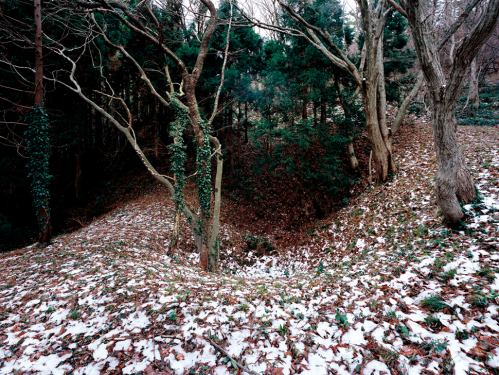
Large Surface Mining Site in Hyakumaidaira District
Chase mining site in Byobusawa District
The remains of chase mining where mining was performed by following the shape of the exposed veins along the stream are well preserved. (National Historic Site)
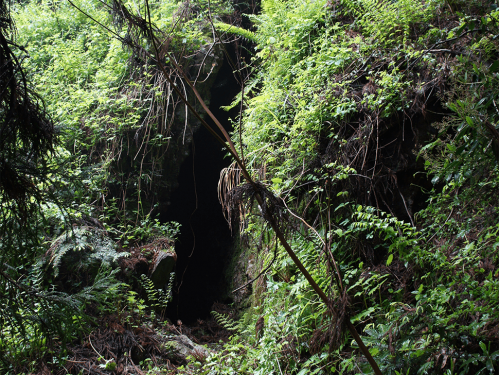
Chase Mining Site in Byobusawa District
Otaki-mabu Tunnel Site
A representative tunnel mining site of the Tsurushi Silver Mine. It appears in the documents and the picture map from the Edo period. Robotic investigation in the tunnel has revealed that the tunnel is preserved in almost the same condition as they were depicted in the picture map from the Edo period. (National Historic Site)
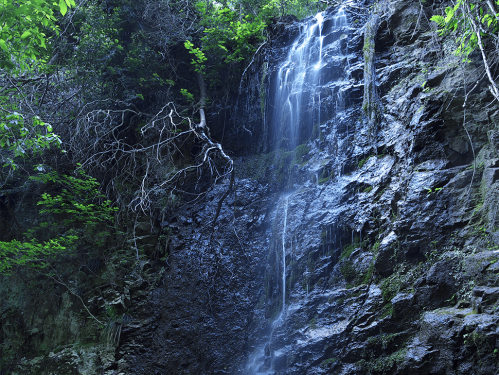
Otaki-mabu Tunnel Site (Photo by Nishiyama Hoichi)
Tsurushi Silver Mine Local Magistrate’s Office Site
At the end of the 16th century, the Local Magistrate’s Office was established to manage the silver mine along with the rule over Sado Island by feudal lord, Uesugi Kagegatsu. It was transferred to Aikawa when the Tokugawa Shogunate seized hegemony in 1603, but it played a role as a local office until the middle of 17 century. Excavation survey revealed that this site consists of three parts (the upper section for ore dressing, the middle section for smelting, and the lower section for management and administration) (National Historic Site)
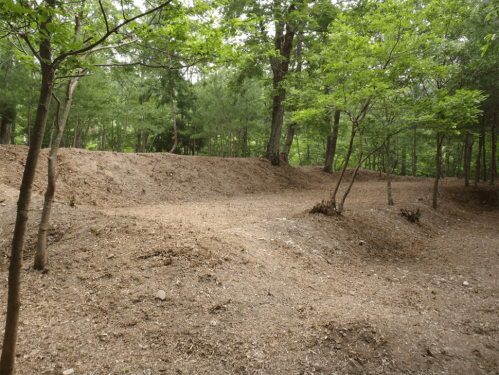
Local Magistrate’s Office Site
Tsurushi Aramachi District
The Tsurushi Aramachi District is located to the east of the Tsurushi Silver Mine Local Magistrate’s Office Site. Irregularly shaped terraces in various sizes were created along the terrain without significant change to the slopes. This indicates how rapidly the settlement formed and expanded to accommodate the growing population of mine workers in the latter half of the 16th century, when mining operations expanded. It is thought that with the decline of the mine in the mid-17th century, many people were relocated to the Aikawa Gold and Silver Mine and the settlements were abandoned.
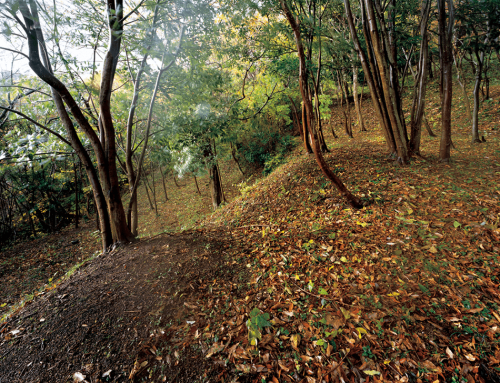
Tsurushi Aramachi District (Photo by Amano Takashi)
Three Mining Methods
Surface mining
This is a method in which lode veins that appear on the surface of the earth are dug along with soil and stone around them. Many of the surface are cratered.
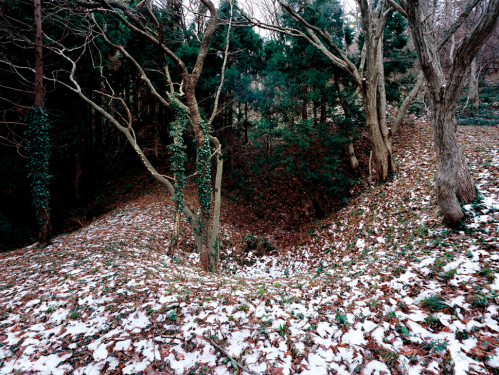
Large Surface mining site in the Hyakumaidaira Mining Zone (Tsurushi Silver Mine)
Chase mining
This is a method of mining by following veins that appear on the ground’s surface. As only veins were excavated, the operation was stopped halfway through in most parts.
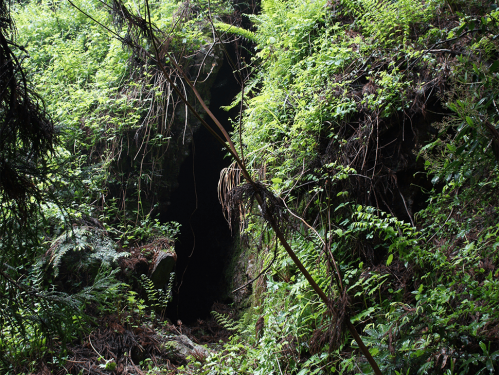
Chase Mining Site in the Byobusawa Mining Zone (Tsurushi Silver Mine)
Sometimes rainwater would accumulate in the surface and chase mining sites.
Therefore, a more efficient method of excavation was introduced.
↓
Tunnel mining
This method involves a preliminary survey on where the veins are located and digging a tunnel horizontally from the hillside or the foot of the mountain to reach the veins underground. This method improved efficiency as two or more veins could be dug simultaneously. In addition, digging horizontally eliminated concerns about rainwater.
In the Tsurushi Silver Mine, 556 surface mining sites, 4 chase mining sites, and 108 tunnel mining sites remain in good condition.
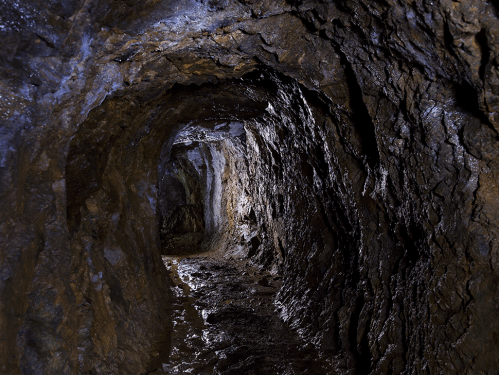
Inside the Otaki-mabu Tunnel Site (Tsurushi Silver Mine) (Photo by Nishiyama Hoichi)
 <外部リンク>
 <外部リンク>
 <外部リンク>
 <外部リンク>
 <外部リンク>
 <外部リンク>
 <外部リンク>


4-1 Shinko-cho, Chuo-ku, Niigata 950-8570
Tel+81-25-280-5726
Copyright © Niigata Prefectural Government. All Rights Reserved.