
本文
Symbols of Niigata
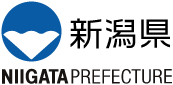
The Prefectural Symbol

The blue circle represents nature, abundance, and the infinite possibilities of the new age of the Japan Sea Rim region. The growing wave, spread out like a fan, is a symbol of the prefecture's limitless development potential and originality. It conveys a positive image of a prefecture that has a beautiful culture, caring people, and global perspectives, all of which help establish Niigata as a strong base for the Era of Japan Sea Exchange.
(Adopted march 27, 1992)
The Prefectural Flower, Tulip

Niigata Prefecture began producing tulip bulbs in the latter part of the Meiji era (1868-1912) and was the first area in Japan to commercially produce flower bulbs. Today, tulips are widely produced in the area thanks to the fertile land and weather favorable to their growth. Currently, Niigata is the number one producer of cut tulips and the number two producer of tulip bulbs in Japan. They are so beautiful that in 1963, the tulip was declared the prefectural flower. Every spring, people enjoy tulip festivals held in various locations.
(Adopted August 23, 1963)
The Prefectural Bird, Toki (Japanese Crested Ibis)

The toki (scientific name, Nipponia Nippon), similar in appearance to the heron, has a white body with a red tint on its wings and tail feather, a sharp beak, and unique eyes. Although toki used to be found in many areas of the Hokuriku (North Central) region, there no longer exists any native Japanese toki in the country and it is now recognized as an endangered species. Breeding efforts between two birds that were donated by China as a symbol of goodwill between Japan and China in January of 1999, have been successful, and the number of toki has been steadily increasing.
(Adopted September 13, 1965)
The Prefectural Tree, Yuki Tsubaki (Snow Camellia)

The snow camellia, different from camellias found in warm regions in both shape and nature, was first discovered in Niigata Prefecture in 1950. Found in the Hokuriku (North Central) and Tohoku (Northeastern) regions along the Japan Sea, the yuki tsubaki grows in mountainous areas under 1500 meters in elevation, The flowers are generally pink. The trees do not grow very large, and their branches grow low to the ground when the area is snowy. Their ability to live and grow green even in the midst of deep snow has come to represent the nature of the people of Niigata.
(Adopted August 27, 1966)
The Prefectural Wildflower, Yukiwariso(Hepatica)

Yukiwariso, also known as hepatica, can be seen all throughout Niigata Prefecture. Being the largest habitat for yukiwariso within Japan, Niigata provides a unique environment for the plants to breed in a wide array of colors and forms. The yukiwariso and its well-preserved habitat are a symbol of Niigatafs robust efforts in nature conservation. The flowers are also actively cultivated in Niigata and it is said that most of those sold in the Japanese market are grown in the prefecture.
(Adopted March 1, 2008)
The Prefecture's Ornamental Fish

Ornamental carp, or nishikigoi as they are called in Japanese, are known as “swimming jewels” and have many different patterns and colorations. These incredible fish have garnered attention from all over the world. It is said that ornamental carp came into being in Niigata Prefecture, stemming from the colored carp that people raised during the late Edo period in the Chuetsu region (the middle portion of Niigata Prefecture). Niigata Prefecture is a world-class producer of ornamental carp and currently produces over 100 different, elegant varieties. It enjoys international renown and has a thriving ornamental carp export industry.
(Adopted May 5, 2017)
The Prefectural Stone, Jade

Jade:Prefectural stone Designated on November 4, 2022
Presented by Itoigawa City
The Association for Making Jade the Prefectural Stone of Niigata petitioned the prefectural assembly to designate jade as the prefectural stone, and the assembly adopted it. This led to Jade being designated as the prefectural stone in 2022. Niigata Prefecture is the largest producer of jade in the nation, and it is the only place that produces such high-quality jade with a clearness suitable for gemstones. All of the jade excavated from archaeological sites in Japan have been found to be from Itoigawa, and among them, the world's oldest jade products have been found at the Ogakuchi site (early Jomon period) in Itoigawa City, which is older than the Mayan civilization. It is known that these processed jade products were distributed nationwide from Hokkaido to Okinawa Prefecture, indicating the oldest Japan sea trade. The Kotaki River and the Jade Gorge of the Aomi River in Itoigawa City are national natural monuments and are also important constituent assets of the Itoigawa UNESCO Global Geopark.
| ◇Contact International Affairs Division,Niigata Prefectural Government Address: Shinko-cho 4-1, Chuo-ku, Niigata-shi, Niigata, 950-8570 Phone:+81‐25-280-5098 Fax:+81-25-280-5126 E-mail:ngt000130@pref.niigata.lg.jp |